Rework is the silent killer of creative productivity. Every revision round that could have been avoided is money burned. Not because the designer did bad work, but because the brief didn't give them enough to work with. We know this because we tracked it.
In Q3 2025, we audited every revision round across our client base. 62% of first-round revisions were caused by unclear or incomplete briefs. Not bad design. Bad briefs. So we fixed the briefs.
The old way
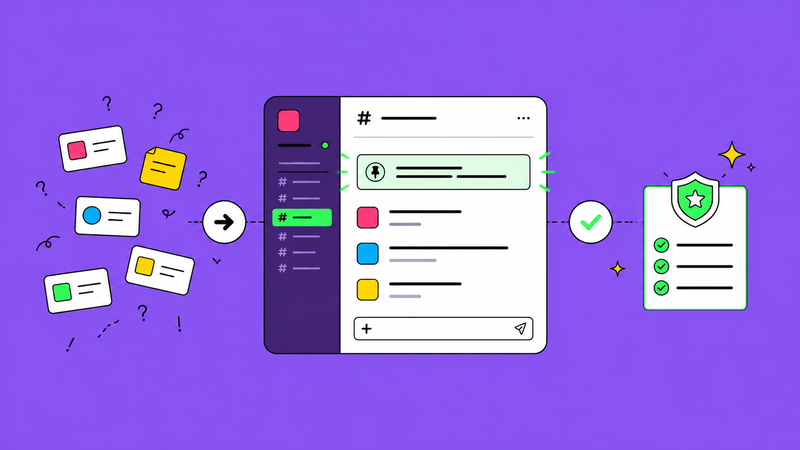
Before we introduced our structured brief, clients would send us requests by email. Sometimes they'd write three paragraphs of context. Sometimes they'd write one sentence: 'Need a social graphic for our new product.' And we'd fill in the gaps with assumptions. Assumptions that were wrong about 40% of the time.
The back-and-forth that followed was predictable. 'Actually, we wanted landscape not portrait.' 'Could you use the other blue?' 'We forgot to mention this needs to include our partner's logo.' Each of these is a revision round. Each revision round costs time. And time is the one thing nobody has enough of.
The five-minute brief
We built a structured brief template that takes five minutes to fill in. Not 20 minutes. Not an hour. Five minutes. Because if a brief takes longer than that, people skip it. And a skipped brief is worse than a bad one.
The template has seven fields. Deliverable type (e.g., social graphic, presentation, banner ad). Dimensions or format. Primary message or headline. Any copy that must be included. Brand or campaign this belongs to. Reference examples (links to things you like). And deadline.
That's it. Seven fields. None of them require more than a sentence to answer. And together, they eliminate 80% of the ambiguity that causes rework.
What happened after we rolled it out
We introduced the five-minute brief in October 2025. By January 2026, first-round revision rates dropped from 62% to 37%. That's a 40% reduction in rework. For a team processing 200+ requests per month, that's roughly 50 fewer revision rounds. At an average of 45 minutes per round, that's 37 hours saved per month. Per month.
Why most agencies don't do this
Two reasons. First, adding structure to the briefing process feels like adding friction. And in a world where everyone is obsessed with 'removing friction,' asking clients to fill in a form feels backwards. But it's not friction. It's clarity. There's a difference.
Second, most agencies make money from billable hours. Rework generates billable hours. We don't bill by the hour. We charge a flat monthly fee. So every revision round we eliminate is time we get back to produce more work. Our incentives are aligned with our clients' outcomes. That's the structural advantage of the subscription model, and it shows up in places like this.