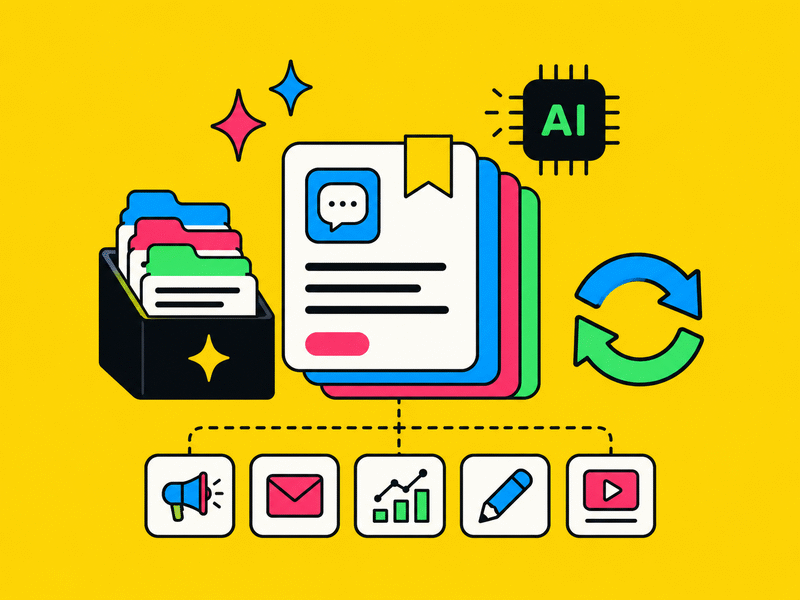
We've built a prompt library that our marketing clients use every week to produce consistent, high-quality content without starting from scratch each time. It's not a secret. It's not proprietary genius. It's just the result of testing hundreds of prompts and keeping the ones that actually work.
Here's a breakdown of the library by category, with examples of what the prompts actually look like and why they're structured the way they are.
Content creation (12 prompts)
These cover the most common content types: blog post outlines, LinkedIn posts, email subject lines, social captions, press releases, case study frameworks, newsletter intros, product descriptions, ad copy variants, landing page headlines, SEO meta descriptions, and FAQ page content.
The key to all of them is specificity. A prompt that says 'write a blog post about marketing' is useless. A prompt that says 'write a 1,200-word blog post for UK B2B SaaS companies about reducing churn through onboarding improvements, in a direct and practical tone, with three actionable takeaways' gets you something worth editing.
Research and analysis (8 prompts)
These help clients gather and synthesise information: competitor analysis, market trend summaries, customer review analysis, SWOT frameworks, audience persona development, industry report summaries, pricing research, and content gap analysis.
The research prompts work by breaking complex analysis into structured steps. Instead of asking 'analyse my competitors,' the prompt guides the AI through specific dimensions: pricing, messaging, feature comparison, content strategy, and customer sentiment. Structured input produces structured output.
Editing and refinement (10 prompts)
These are the most underrated category: tone adjustment, conciseness editing, clarity improvement, headline testing, CTA optimisation, brand voice checking, jargon removal, reading level adjustment, structure reorganisation, and fact-checking guidance.
Editing prompts are where AI adds the most value for experienced writers. You don't need AI to write your content. You need it to review your content from angles you might miss. A prompt that says 'review this copy and identify any sentences that use more than 25 words, then suggest shorter alternatives' is genuinely useful.
Strategy and planning (10 prompts)
These support higher-level thinking: content calendar generation, campaign theme brainstorming, channel strategy, budget allocation frameworks, KPI definition, A/B test hypotheses, customer journey mapping, editorial guidelines, repurposing strategies, and quarterly review templates.
Strategy prompts work best when you provide context about your specific business. Generic strategy advice is worthless. But if you tell the AI your industry, audience, budget, and goals, it can generate frameworks that are actually relevant to your situation.