Let's be honest about something. The freelancer model had a good run. For years, if you needed a logo or a set of social graphics, you found someone on Upwork, agreed a price, and crossed your fingers. Sometimes it worked out brilliantly. Sometimes it didn't. And that uncertainty is exactly why the conversation has shifted.
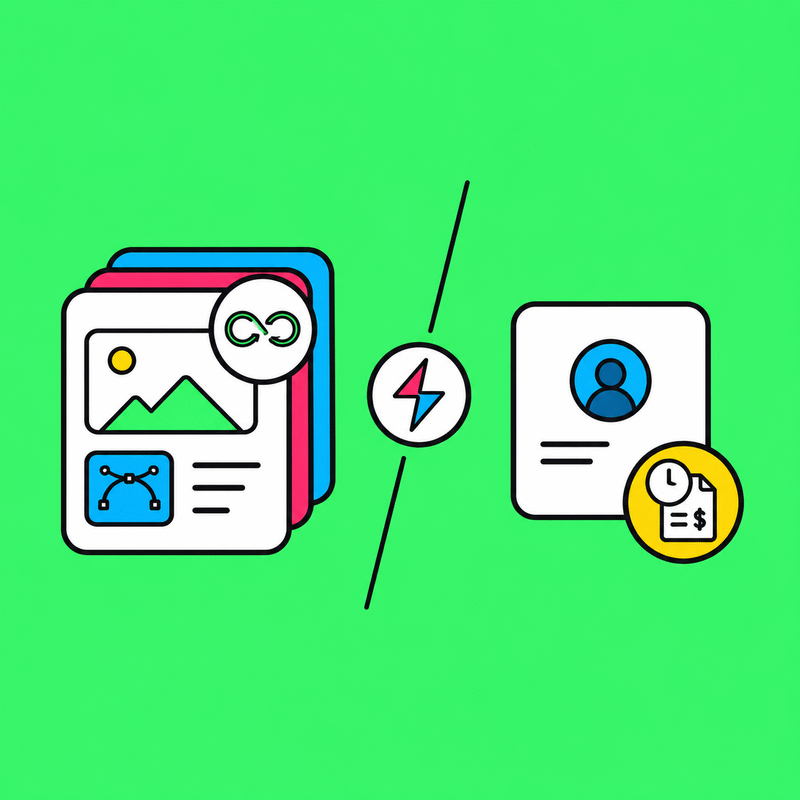
Unlimited design subscriptions have been around for a few years now, but 2026 is the year they stopped being a novelty and started being the default for growing businesses. So if you're weighing up your options, here's an honest comparison from an agency that runs one of these services.
The freelancer pitch
Freelancers are brilliant at one thing: specific, contained projects. Need a wedding invitation designed? A freelancer is probably your best bet. Need a one-off logo? Same deal. The freelancer model works when the scope is clear, the timeline is relaxed, and you don't need ongoing creative support.
The problems start when your needs grow. You launch a product and suddenly need social ads, landing page graphics, pitch decks, email headers, and an updated brand guide. Your freelancer, who was perfect for that logo project, is now juggling your work alongside four other clients. Turnaround times stretch. Revisions become negotiations. And you're spending more time managing the relationship than actually getting work done.
The subscription pitch
An unlimited design subscription gives you a dedicated team (or at least a dedicated slot in a team's workflow) for a flat monthly fee. You submit requests through a portal. Work comes back. You request revisions. More work comes back. There's no per-project pricing, no scope creep anxiety, and no awkward conversations about whether that extra revision counts as a new job.
The real value isn't the 'unlimited' part, though. Most businesses submit between 10 and 25 requests per month. The real value is predictability. You know exactly what you're spending. You know the turnaround time. You know the process. And that means you can actually plan your marketing calendar without worrying about whether your designer is going to ghost you mid-project.
The cost comparison nobody talks about
A mid-level freelance designer in the UK charges between £300 and £600 per day. If you need design support three days a week, that's £900 to £1,800 per week, or roughly £3,600 to £7,200 per month. An unlimited design subscription typically runs between £495 and £1,295 per month. Even at the premium end, you're looking at a fraction of the cost.
And that's before you factor in the hidden costs of freelancing: the time you spend writing briefs from scratch every time, the onboarding period when you switch designers, the back-and-forth on revision rounds, and the project management overhead.
So which one should you pick?
If you need design work once a quarter, hire a freelancer. Seriously. A subscription service isn't built for occasional users, and you'll be overpaying for capacity you don't use.
If you need regular creative output, if you're running campaigns, launching products, updating your brand, or just keeping your social channels looking sharp, a subscription will save you money, time, and headaches. That's not a sales pitch. That's maths.